



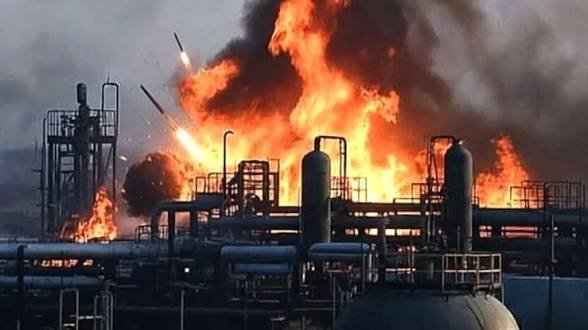
The escalating tensions in the Middle East have dealt a direct blow to South Asia’s energy security. Following a reported Iranian missile strike on Qatar’s Ras Laffan Industrial City—one of the world’s most critical liquefied natural gas (LNG) hubs—a wave of uncertainty has gripped the global energy market, with Bangladesh, India, and Pakistan standing on the frontlines of the crisis.
The Heartland of Global LNG Under Fire Ras Laffan is the nerve center of Qatar’s gas production, handling the vast majority of the nation’s LNG exports. As the world’s leading supplier of LNG, any disruption at this facility sends immediate shockwaves through international supply chains. Military analysts suggest that targeting such a high-value economic asset marks a dangerous shift in regional warfare.
The South Asian VulnerabilityEnergy experts warn that the impact of this strike will be felt most acutely in South Asia. Bangladesh, India, and Pakistan rely heavily on long-term contracts with Qatar to meet their domestic energy demands.
Key Risks to the Region:
Power Generation Crisis: A significant portion of the electricity in these three nations is generated by gas-fired power plants. A supply hitch could lead to widespread load-shedding.
Industrial Paralysis: Heavy industries, including fertilizer and textile manufacturing, depend on a steady gas flow. Production halts could lead to massive export losses.
Economic Strain: With supply tightened, the price of LNG on the “spot market” is expected to skyrocket. This will deplete foreign exchange reserves and trigger inflationary pressure on the economies of Dhaka, Delhi, and Islamabad.
Expert Analysis
“South Asia is uniquely vulnerable because it lacks significant strategic gas reserves,” noted an international energy consultant. “If the situation at Ras Laffan results in a prolonged force majeure, we are looking at a regional energy blackout that could stall post-pandemic economic recovery.”
As of now, Qatargas has not officially confirmed the extent of the damage, but shipping data shows several tankers have already diverted from the Persian Gulf to avoid the conflict zone.